
Clear Orthodontic Aligners
This method is suitable for selected cases, as determined by your orthodontist, and provides an alternative solution for patients who prefer not to wear braces.
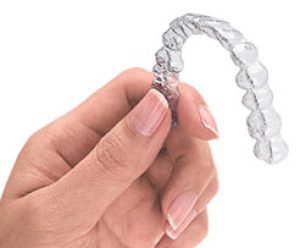
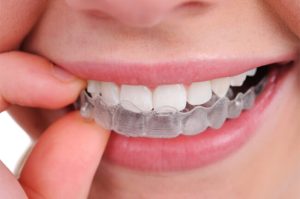
During treatment, the patient wears a series of custom-made clear aligners. These aligners gradually move the teeth into the desired position while offering excellent aesthetics, as they are virtually invisible when worn.
Beyond the aesthetic advantage, this technique offers additional benefits: patients adapt more easily to the new oral environment compared to conventional braces, and oral hygiene is significantly easier since the aligners are removable, allowing for proper brushing and cleaning. Furthermore, patients can preview their final treatment outcome through a three-dimensional (3D) simulation before treatment even begins. However, this technique requires exceptionally precise treatment planning, as 100% of the plan must be designed in advance, even for a highly specialized orthodontist.
Crowding and poor occlusion of the teeth may lead to problems in chewing and can create pathways for periodontal disease, which in turn increases the risk of further health issues.
Straight teeth, therefore, mean better health!
Yet, many people are reluctant to wear conventional orthodontic appliances (braces), either because they are too visible or because they feel restrictive.
In such cases, an effective alternative is removable clear aligners, which are worn for a few days and then replaced with the next set in the series.
The Dr. Katerina Douma-Michelaki, DDS, PhD, Specialist in Orthodontics for Children & Adults and General Secretary of our Society, answers the most common questions about clear aligners:
Clear aligners are a series of custom-made "membranes" that gradually straighten the teeth without the need for braces or wires. They are made from a special, flexible plastic material that is shaped precisely to fit the patient's teeth. To create them, the orthodontist provides the manufacturer with a digital scan or a special dental impression of the teeth. This is then digitized, allowing the orthodontist to design the necessary therapeutic movements. Once the treatment plan is finalized, an advanced 3D technology process generates a numbered series of aligners. The patient wears each aligner in sequence, typically for about one week, before replacing it with the next.
Aligners move the teeth gradually, millimeter by millimeter, by applying controlled pressure to specific areas. These pressure points are not the same throughout the series of aligners; instead, they change progressively so that the teeth are gently guided into their desired positions.
Treatment with aligners is not considered painful. However, mild discomfort or a feeling of pressure may occur when starting with a new aligner, as this indicates that the teeth are moving into their new position. This sensation typically subsides within a couple of days.
For optimal results, aligners should be worn 20–22 hours per day, removing them only during meals and for oral hygiene.
Follow-up appointments usually take place every 6–8 weeks, depending on the treatment plan, so that the orthodontist can monitor progress and provide the next series of aligners.
Yes. Patients who have undergone orthodontic treatment in the past and have experienced relapse are often excellent candidates for aligner therapy
Aligners are effective for many cases of mild to moderate crowding, spacing, or bite issues. The orthodontist will evaluate each case to determine if aligners are the right treatment option.
Aligners should be removed before eating or drinking anything other than water. This allows patients to enjoy their usual diet without restrictions and maintain proper oral hygiene.
If an aligner is lost, the orthodontist will provide guidance—patients may be advised to move on to the next aligner in the series or to use the previous one temporarily until a replacement is made.
Some patients may notice a slight change in speech, such as a temporary lisp, during the first few days of wearing aligners. This usually resolves quickly as the patient adapts.
No. There are several systems available, which may differ in materials, technology, and treatment protocols. The orthodontist will recommend the most appropriate system for each individual case.
Success with aligner therapy depends heavily on patient compliance.
Aligners must be worn consistently as prescribed by the orthodontist to achieve the desired results.
 English
  Greek
Greek